

From automotive suspensions to industrial machinery and railways, rubber springs are used everywhere. They absorb shocks, isolate vibrations, bear loads, and return to shape without permanent deformation.
Rubber Moulding is how rubber springs are precisely manufactured to ensure they are durable, flexible, and resistant to fatigue and environmental wear. As a Custom Rubber Moulded Products Manufacturer, ensuring consistent quality at every stage of production is critical.
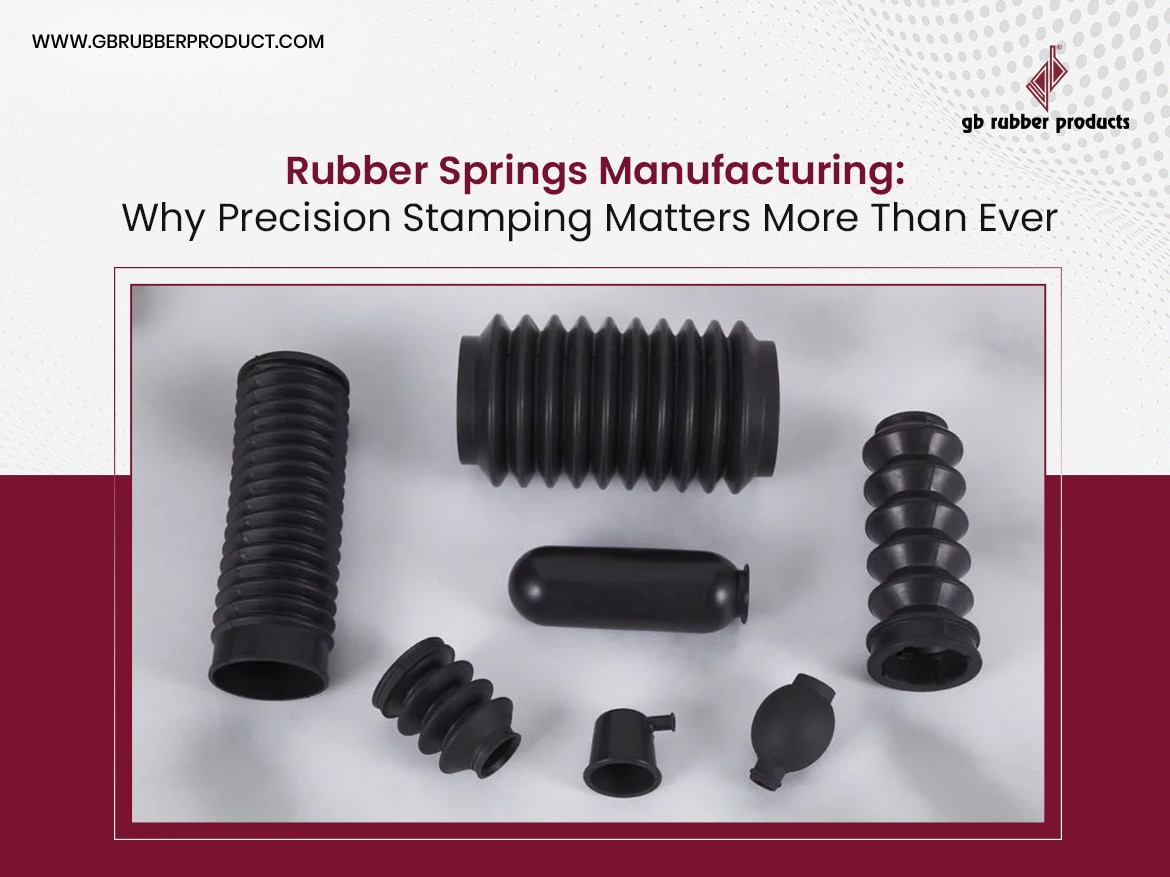
Understanding the Manufacturing Process of Rubber Springs
Rubber springs are created through moulding processes—compression, transfer, or injection moulding—which shape uncured rubber compounds under heat and pressure.
The base material is typically natural or synthetic rubber (like EPDM, NR, NBR), selected based on load-bearing needs, vibration frequency, and temperature or chemical resistance. Through custom moulding, the rubber is formed into components such as:
- Vibration isolators
- Suspension bushings
- Anti-vibration mounts
- Rail pads
- Industrial dampers
Unlike metal, rubber springs combine elasticity with damping, offering both flexibility and energy absorption in one compact unit.
For a Custom Rubber Moulded Products Manufacturer like GB Rubber Products, integrating metal bonded rubber parts becomes seamless when rubber springs are engineered with precise bonding and geometry.
Common Challenges in Rubber Springs Manufacturing (And Their Solutions)
- Inconsistent Hardness or Stiffness
Why it happens: Poor mixing or improper curing
Fix: Use of high-quality rubber compounds, precise temperature control, and post-curing processes. - Bonding Failure (in metal-rubber hybrids)
Why it happens: Contaminated surfaces or incorrect adhesives
Fix: Surface treatment of metal inserts, proper adhesive selection, and controlled moulding conditions. - Air Traps or Voids in Moulded Parts
Why it happens: Poor mould design or venting issues
Fix: Optimized mould flow paths, vacuum-assisted moulding, and simulation testing.
By tackling these issues early, Custom Rubber Moulded Products Manufacturers like GB Rubber Products ensure longer life, better load handling, and safer performance of rubber springs under tough operating conditions.
Why It All Comes Back to Rubber Moulding
The two features that make rubber springs so reliable—damping and durability—are engineered during the moulding process.
- Damping: Rubber naturally dissipates energy, making it ideal for vibration and noise control applications in vehicles, machines, and heavy equipment.
- Durability: Proper compounding and curing result in rubber springs that resist fatigue, chemicals, temperature changes, and wear—key for industrial and automotive applications.
Surface treatments, protective coatings, or fabric reinforcement can further enhance weather resistance, oil compatibility, or mechanical strength depending on the use case—especially in metal bonded rubber components.
Finding the Right Manufacturing Partner
Whether you’re designing vibration isolators for a heavy-duty engine or creating hybrid metal bonded rubber bushings, the quality of your rubber spring begins with expert moulding.
Look for a Custom Rubber Moulded Products Manufacturer who understands rubber chemistry, tooling precision, and metal-to-rubber bonding techniques. Reliable partners should offer in-house testing, R&D capabilities, and end-to-end quality control.
At GB Rubber Products, we don’t just mould rubber—we engineer reliable performance. With expertise in both rubber springs and metal bonded parts, we deliver components that absorb stress, control motion, and stand the test of time.
Partner with GB Rubber Products for rubber springs that never lose their bounce, no matter the pressure.

